Bible stories can support early literacy when adults and children read, talk and retell together. They offer opportunities to practise vocabulary, listening and comprehension. They complement phonics and other reading instruction; they do not replace them or guarantee faster reading.
A familiar story can be a comfortable starting point. Your child may recognise a person or picture before they can read the words. That gives you something to talk about together.
Read with the child, not just to the child
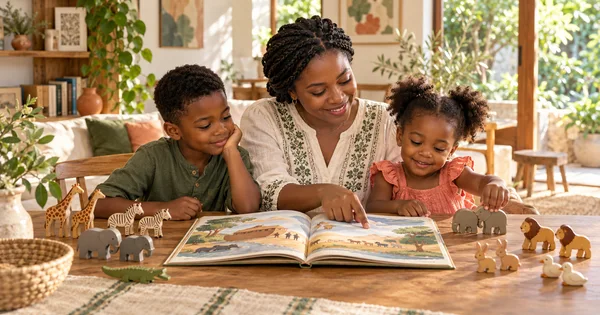
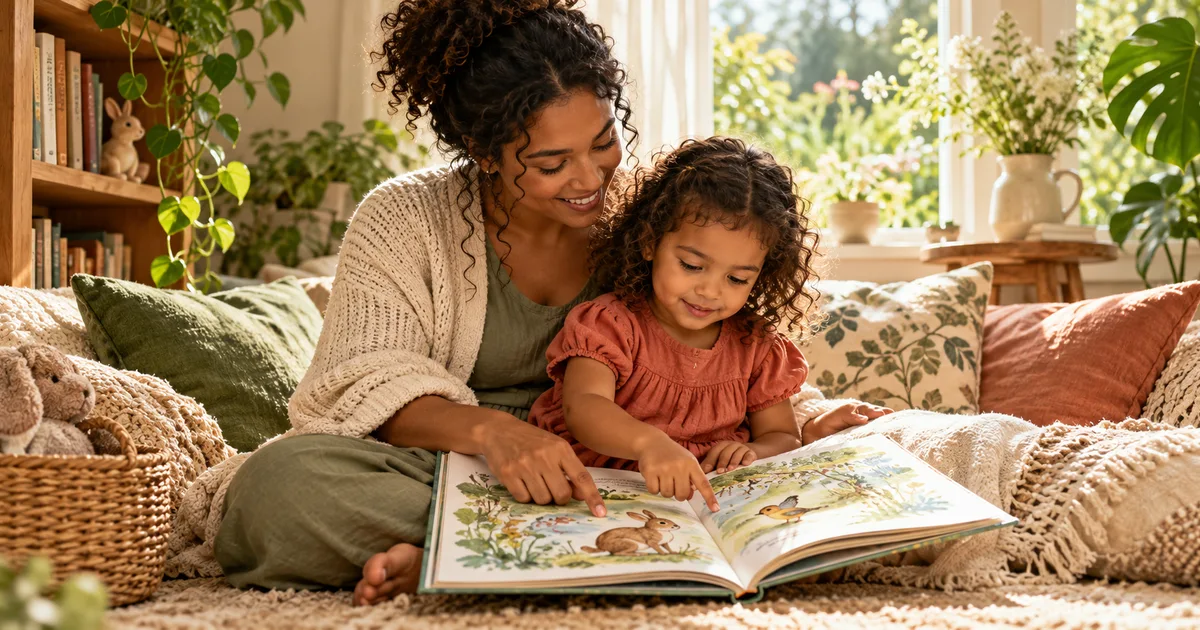
Pause at an interesting picture and follow the child's attention. Name what they point to. Leave room for their questions, gestures and comments. You do not need to ask a question on every page.
The American Academy of Pediatrics recommends shared reading beginning in infancy and continuing through at least kindergarten. Its guidance emphasises conversation and relationships around books, not an app-specific result.
Build vocabulary in a real context
Choose one unfamiliar word rather than a long list. In Noah's story, explain an ark as the large boat in the account. In the lost sheep story, talk about searching and finding. Use the word again later while playing or looking at another book.
For abstract words such as mercy, start with a simple explanation and a relevant example. Check the passage when discussing what a character did. A child's understanding will develop through many conversations rather than one perfect definition.
Retell with pictures and objects
Put three pictures or toys in order: the beginning, something that happened, and the ending. Let your child tell the story in their own words. If they mix up an event, return to the picture or passage together.
A toddler may point and say one word. A preschooler may describe a short sequence. An older child may explain a choice or compare two accounts. Use these as flexible activity ideas, not age-based promises.
Keep phonics and comprehension connected
Stories help children discuss meaning. Phonics teaches relationships between letters and sounds so children can decode words. Both matter, and children may need different amounts of support with each.
Notice a familiar initial sound or a short word when your child is ready. Do not turn every story into a decoding test. For independent reading practice, use texts suited to the child's reading instruction as well as stories you enjoy reading aloud.
Welcome the family's languages
Read and discuss a story in the language you use most comfortably. A child can describe a picture in one language and learn a related word in another. Keep the conversation warm rather than demanding constant translation.
Try a short read-along routine
- Let the child choose a story or picture.
- Read a short section aloud or listen together.
- Name one interesting word or event.
- Invite a retelling, drawing or question.
- Stop while the experience still feels enjoyable.
Little Vine's illustrated stories include read-along options. Adult conversation remains valuable whether the narrator is on or off. Browse the curriculum for the wider learning approach, and keep varied print books in the routine too.