Faith-based learning connects a family's Christian beliefs with everyday learning. For children ages 2–8, that can mean reading a Bible story together, talking about its meaning, and exploring a related counting, language, nature or art activity. It does not require turning every moment into a lesson.
At Little Vine, faith is part of the learning experience. We offer Bible stories, games and creative tools that families can explore together. They offer opportunities to practise skills and discuss faith together.
What faith-integrated learning looks like
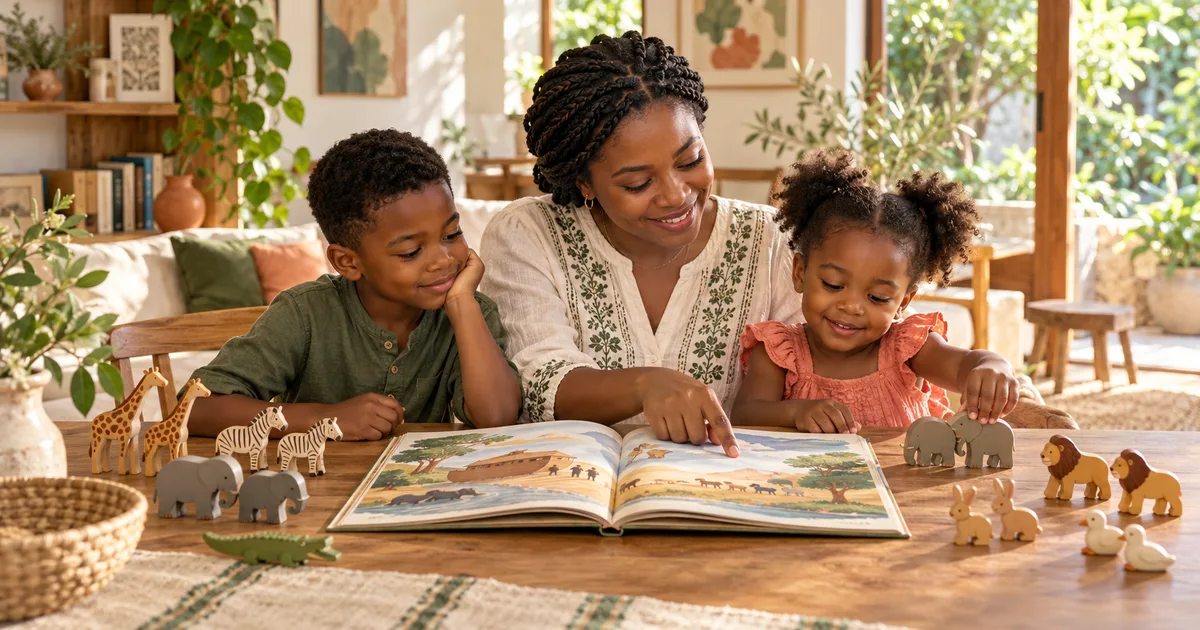
Start with a passage rather than a performance target. Read a short part of Noah's story, then count toy animals in pairs. Read about Ruth, then notice grain in a picture or help prepare a meal. Talk about the lost sheep, then draw a picture of someone being welcomed home.
The practical activity is an invitation inspired by the account. It should not be presented as something the Bible says happened. Keep the reference nearby so children gradually learn that an illustrated retelling points back to Scripture.
A simple story-to-activity routine
- Read: Choose a short story appropriate to your child and stop when their attention moves on.
- Notice: Ask one question about a person, object or choice in the story.
- Play: Count, build, draw or act out one related idea.
- Connect: Name an everyday situation where the theme might matter.
- Return: Let the child revisit the story or activity another day.
For example, after hearing about a generous act, a child might make a card for a neighbour. After a story about building, they might test two block towers. Faith supplies a meaningful context; the activity supplies room to explore.
Adapt the activity to the child
A toddler might point to an animal and name it with you. A preschooler might group animals into pairs. An older child might make a scene and explain their choices. These are suggestions, not developmental deadlines. Choose support based on what your particular child enjoys and can manage.
NAEYC describes developmentally appropriate practice as strengths-based and play-based, with attention to each child's individuality and context. That is a useful reminder to leave room for different languages, abilities, interests and family experiences.
Keep questions open and Scripture accurate
Ask what the child noticed before offering your interpretation. Explain unfamiliar words in ordinary language. If a question is difficult, say that you can look at the passage together rather than invent an answer.
Avoid describing game success as earning God's love. Winning, finishing or answering correctly does not measure faith. A child can enjoy a counting game and still need help understanding its story.
Use digital play as one part of family life
Explore a Bible story together or try an activity in the Playground, then carry the idea into drawing, conversation or outdoor play. A screen can provide a starting point; it need not become the whole experience.
The goal is a shared habit of learning and reflection. Begin with something small enough to repeat with warmth, and give the child room to shape what comes next.