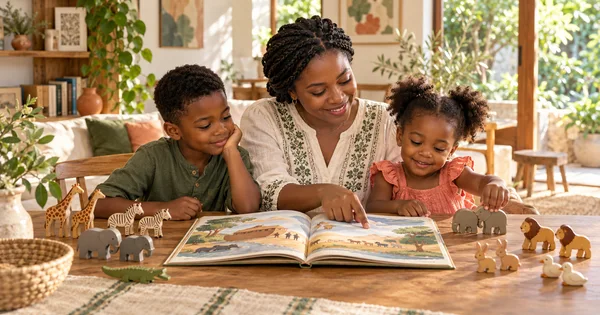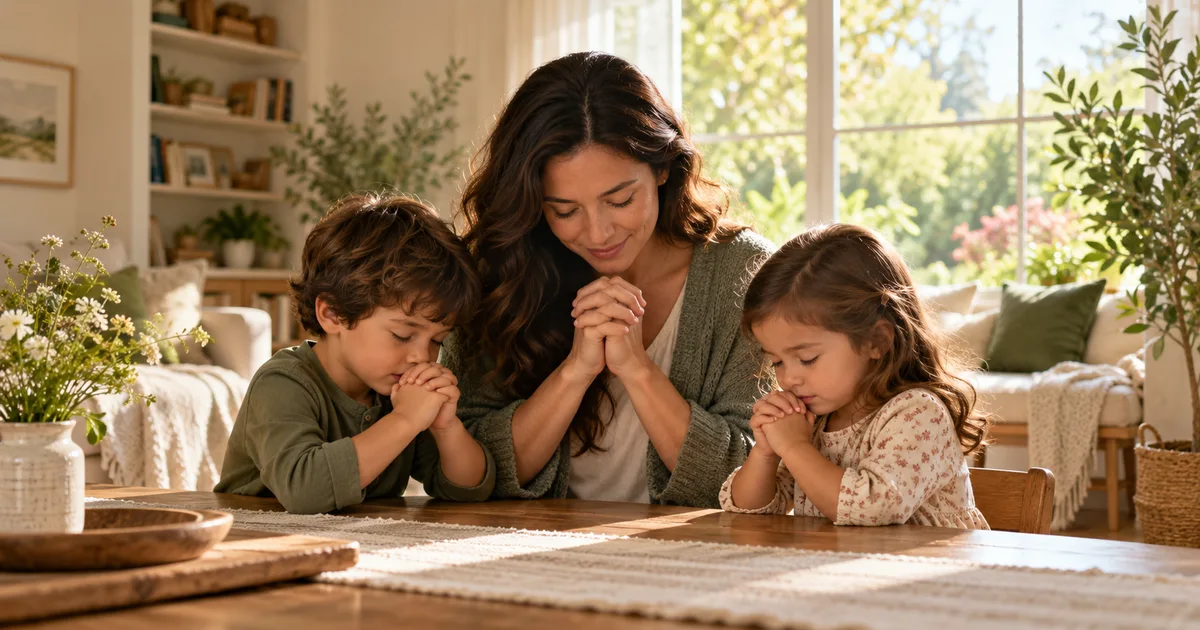
Teach children to pray by modelling short, honest prayers and inviting them to take part in ways they understand. Begin with ordinary moments of gratitude or concern. Children can listen, speak, draw or remain quiet; prayer should not become a performance test.
This guide offers flexible Christian family practices. Adapt the ideas to the child, your church tradition and the situation.
Ages 2–3: notice and give thanks
Name one concrete thing: a meal, a flower or someone who cared for you. Offer a short prayer of thanks in language the child hears at home. A toddler can point, repeat a word or simply listen.
Keep the moment brief and warm. They do not need to sit perfectly still or understand an abstract explanation before being included in family prayer.
Ages 4–5: invite their own words
Ask what they would like to thank God for or what is worrying them. Leave time for their answer. An unusual concern or a long list of favourite things can be received kindly without turning it into a lesson.
You can offer a simple structure: thank you, please help, and amen. Present it as support, not the only acceptable way to pray. Familiar prayers from your church can also provide a shared rhythm.
Ages 5–6: make room for reflection
After a story or prayer, pause briefly if your child is comfortable. They may want to draw, ask a question or say nothing. Do not pressure them to report a special experience or treat a thought as a message from God.
Read the relevant Bible passage together when a question concerns Scripture. The account of Samuel listening can prompt a conversation, but it should not become a promise that every child will hear an audible voice.
Ages 6–8: pray for people and situations
Invite children to name a friend, relative or community they care about. A simple notebook can hold drawings or names. Keep other people's private information private, and choose concerns suitable for the child's understanding.
Connect prayer with appropriate practical care. A child might make a card, help prepare food or ask how someone is doing. Prayer and helpful action can be part of the same family habit.
Respond honestly to difficult questions
If a prayer is not answered as hoped, acknowledge the disappointment. Christians can bring sadness and questions to God. Avoid promising that every request will happen, or suggesting that a painful outcome means the child did not pray correctly.
If the child does not want to join, leave the invitation open and model your own practice. A relationship should not depend on saying the expected words on demand.
Build a gentle routine
- Choose one ordinary moment your family already shares.
- Offer a short prayer or invite the child to choose a topic.
- Let participation vary from day to day.
- Finish calmly and return to the rest of family life.
Explore Bible stories together for themes such as gratitude, trust and care. For a wider activity routine, see faith and learning. Prayer is part of Christian formation, with room for each family's tradition and each child's questions.